_edited.jpg)

Why we override ourselves
Updated: Jul 4
Welcome to Part 5 of Lost in Love, a collection of reflections on connection, trust, boundaries, and the relationships that matter most.
acceptance
noun/acˈsɛptəns/
The act of recognizing a situation or condition as it exists without attempting to change it.
Acceptance is not approval. It does not mean liking, agreeing with, or condoning what’s happening. It means acknowledging reality as it is, without trying to bend it into something more tolerable before you act.
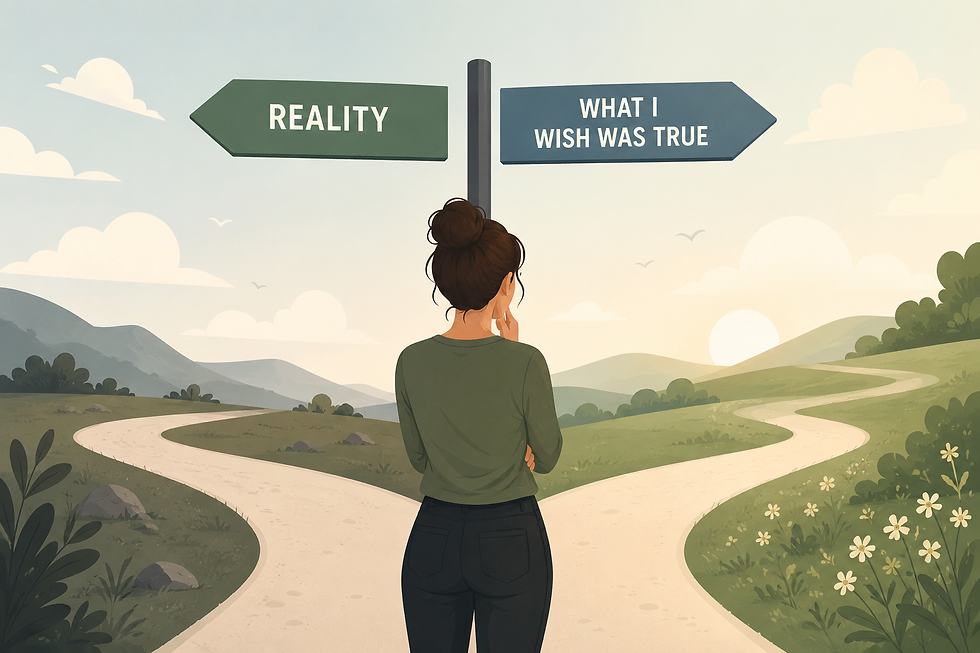
Acceptance looks like recognising that the situationship isn't working for you. We have to fight that false hope that maybe, just maybe, next week will be different. We have to trust our feelings. No amount of wishing will make the unpleasant situation bend into something more palatable.
Knowing doesn’t translate to doing
Most of us already know what to do. You know that getting fit means actual exercising, feeling calmer means stopping the constant overextending or feeling happier means talking honestly with that person about what isn’t working for you.

We can gain knowledge and insight, which is incredibly helpful. We realise we're terrible at boundaries, afraid of conflict, or wondering whether a healthy relationship even exists. But even when we know, we still get stuck. Something inside of us says ‘hell no’. Maybe if we just try harder, this experience will become the thing we really hoped for.
The human protest
This is our quiet (or loud) ‘absolutely not’ to this version of events. We wish it wasn’t this hard, or feel that we shouldn’t have to bear this pain. We are having an entirely human protest against reality. In no universe did we ever wish to be in a relationship that makes us feel unloved, to be stuck with an awful boss or over budget.
Our protest is entirely valid, because it is genuinely hard.
Distress as data
The discomfort isn't random. It tells you two things at once: how much this matters to you, as well as how big the barrier is that’s in the way.
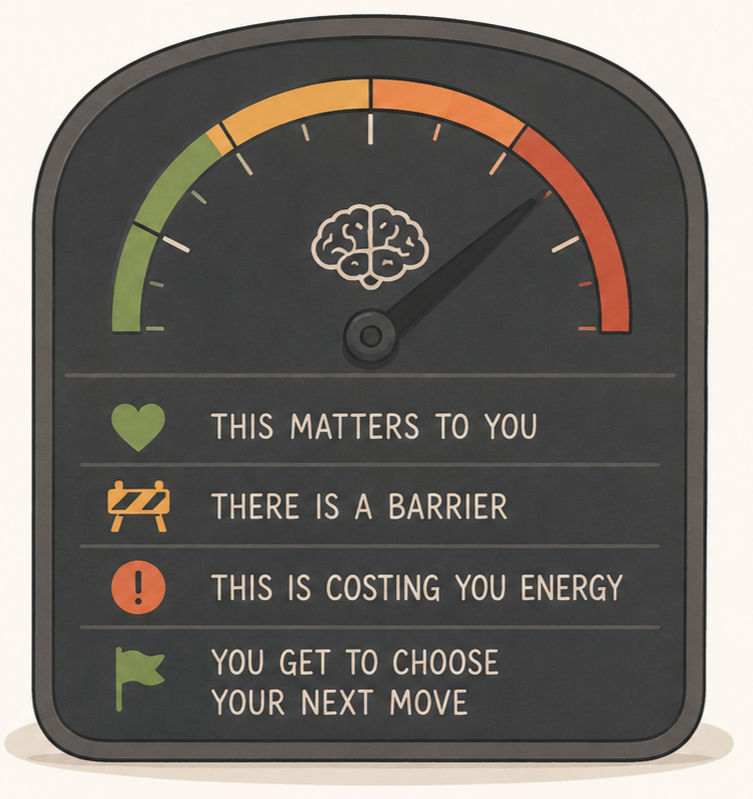
We want to feel safe, loved, cared for and that we matter. When we value these things, we hope that the person we’ve attached to will meet these needs. We hang on because we wish that this relationship hadn’t become another disappointment on the road to our deepest desires to be seen and loved.
It also means that the barrier to having these needs met feels enormous. Entering the dating scene again and starting over with someone new; running the risk of a repeat experience.
Wise decisions begin with accepting the experience we're actually having, rather than the one we hoped for. Cutting our losses and doing the necessary psychological work to prevent repeating the experience.
We need to be a safe, trustworthy person and learn how to find a healthy partner. And then we try again, always running that risk of loss, but with much better odds of finding the hoped for love.
The real cost
The difficulty is not explained entirely by a lack of effort or discipline. It is about that emotional cost of the gap between what reality is and what you hoped reality would be. It costs us the hope that if we just wait a little longer or try a little harder, things might change.
Making decisions in a reality that doesn’t match the one you wanted is where people get stuck. Denial is bashing our heads against the same wall hoping that this situationship will finally be want we want.
Doing the “right” thing often feels bad. It can bring anxiety, grief, guilt, disappointment, or uncertainty. This is inherent in the human condition. And quite honestly, it sucks a whole lot. Swallowing that existential truth takes time. We learn to accept that we have to be brave and endure a fair amount of hardship to work towards what we need and want.
The trade
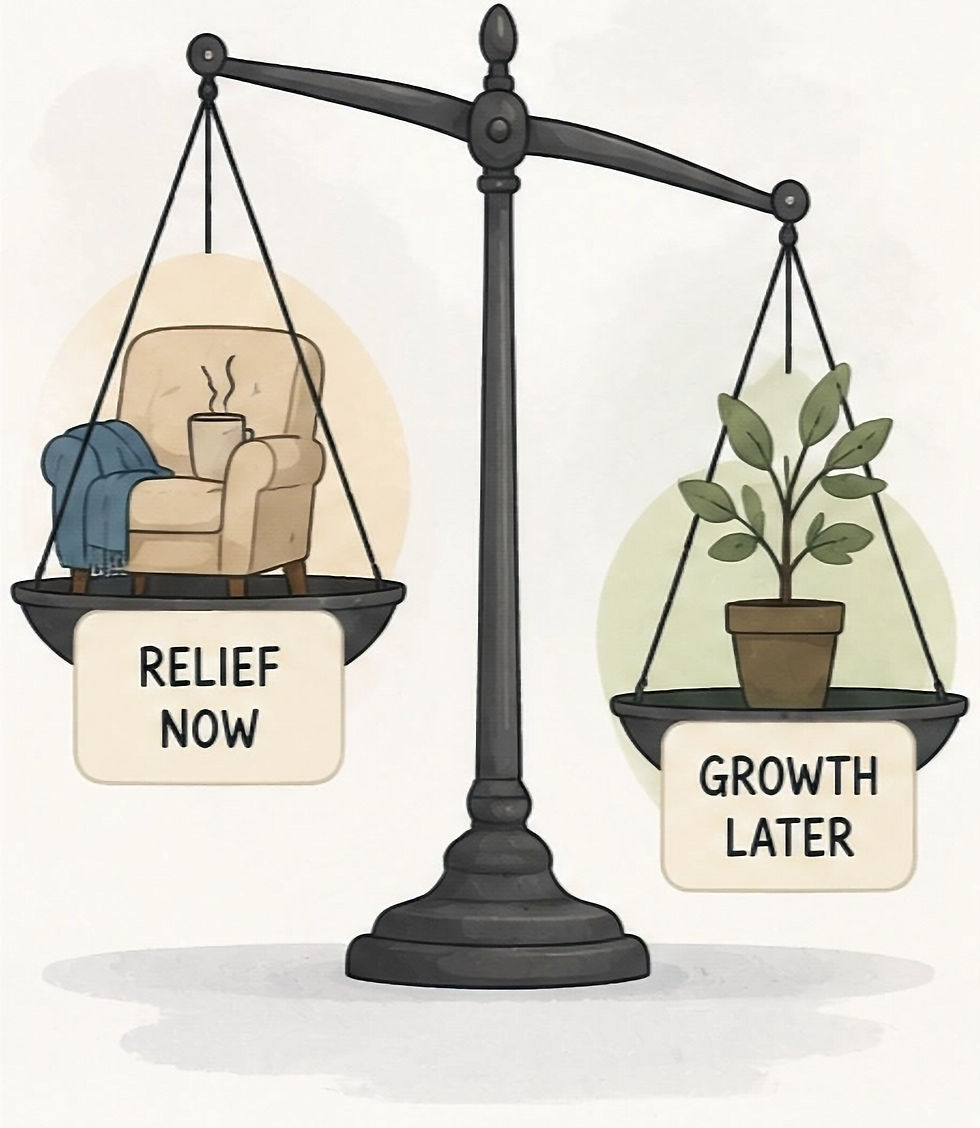
Overriding ourselves is essentially a trade. We are giving up comfort and convenience now for fulfilment in the long-term. Instead of going through the whole schlepp of a hard conversation and potential heartbreak, it feels a whole lot easier to just carry on as things are.
Our systems, particularly when already taxed, decide that the demand of investing now is not worth it. It feels too much to start or to change something. Your brain isn't wrong, at least in the short term. Nobody wants to suffer or struggle.
We avoid hurt in the moment, especially when we are overtired and under supported. We’re stressed or overworked or already struggling too much to have to have that hard conversation. Especially if you know it isn’t going to go well.
Our nervous systems might not be resourced enough to pay that consistently. It feels like an uphill battle (which it most likely is), and that feels like just too much to cope with right now.
Letting go of expectation
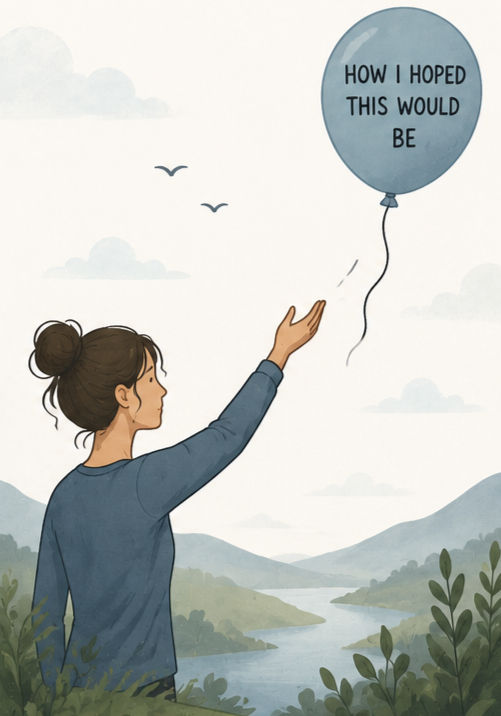
The work isn’t to find better strategies. It is building strength so we can tolerate that discomfort long enough to choose differently and more wisely.
This is why all the knowledge and tools often don’t solve the problem.
We have to let go of the expectation that it could be easier.
The Work

Change only starts with understanding. It is not the full picture. We need enough internal capacity to act on the understanding repeatedly.
You can’t tow a truck with a bicycle. You need an engine powerful enough for the load. If the load keeps winning, your engine isn’t big enough yet. Insight reduces confusion, but capacity (a big enough engine) creates change.
All the things I’ve talked about on being a healthy psychological character are the things we need to work at. A psychologically healthy person has an engine big enough to carry life's inevitable load.
The work isn't removing the load. It's building the engine.
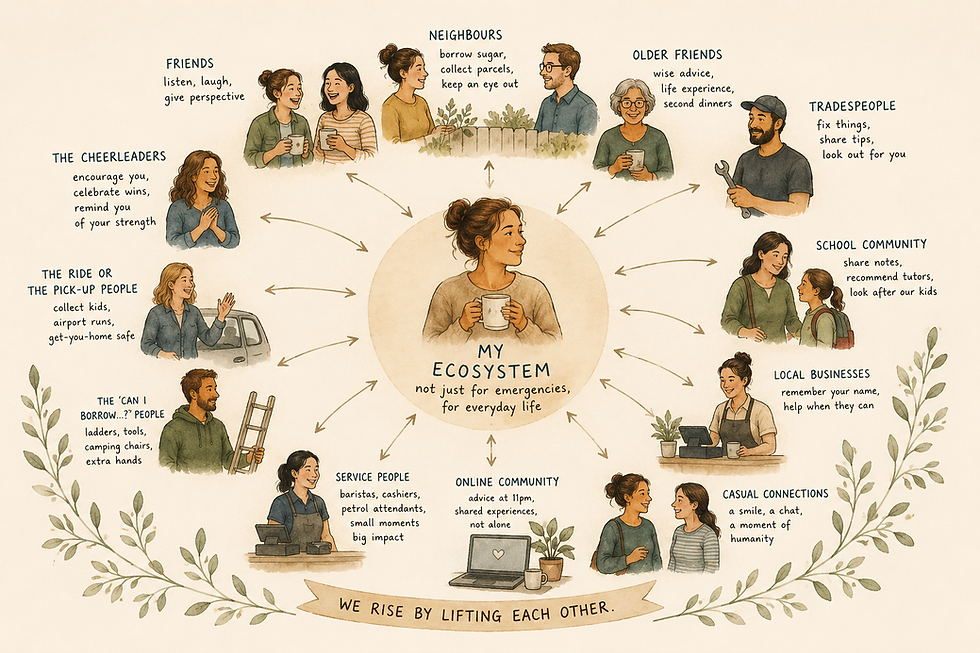
Once you've stopped overriding yourself, the next question becomes: who helps you carry the weight? Read the last article in the series on building your social infrastructure here.


Comments